Imagine being so bad at your job that nobody wants to work with you. For nearly one hundred years, that was the harsh reality for the British Cycling team. Since 1908, British riders had won just a single gold medal at the Olympic Games. They were so mediocre, so famously underwhelming, that one of the top bike manufacturers in Europe actually refused to sell bikes to the team. They were afraid it would hurt their brand's reputation to be seen with such losers.
The team had no budget, no glory, and no hope. They were the laughingstock of the cycling world.
Then, in 2003, everything changed.
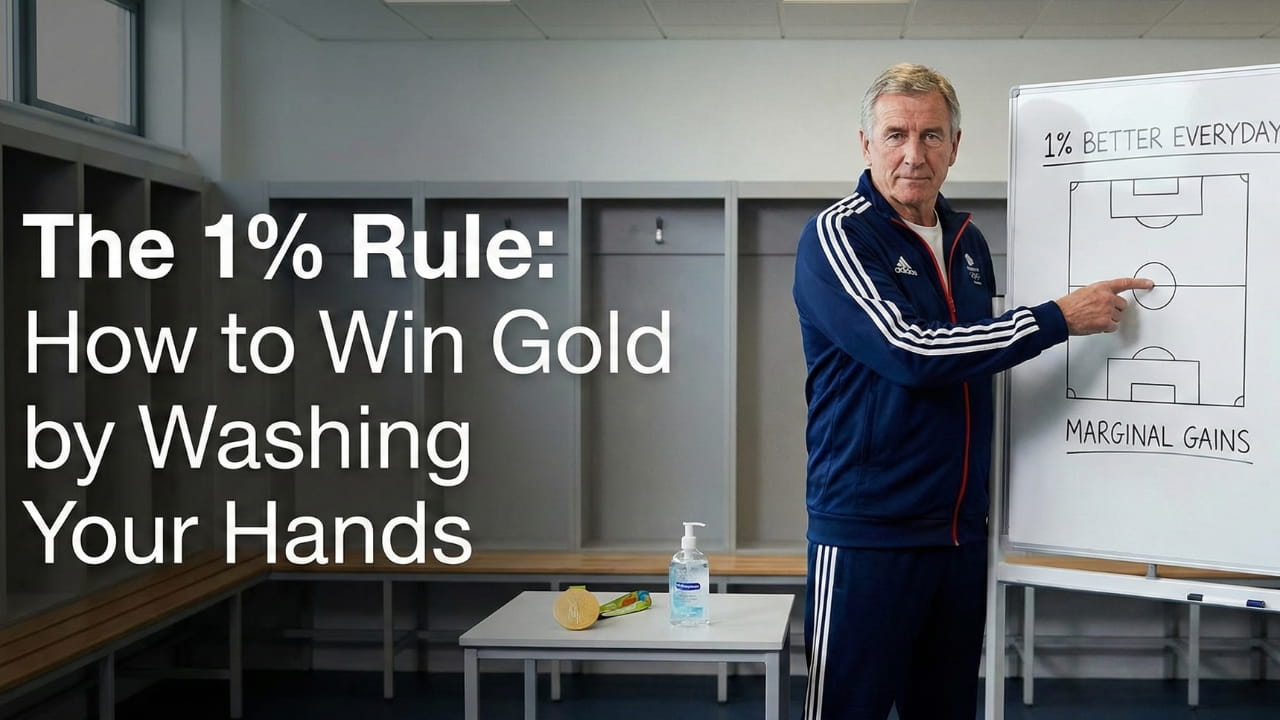
The organization hired a new performance director named Dave Brailsford. Unlike previous coaches who yelled about "training harder," "wanting it more," or "digging deep," Brailsford had a different philosophy. He wasn't interested in finding a silver bullet. He wasn't interested in a 100% improvement in one area. He was interested in a 1% improvement in 100 areas.
He called this strategy "The Aggregation of Marginal Gains." It sounds like a boring business term, but it is actually a revolutionary way to look at success. And it didn't just change cycling; it created a blueprint that works for businesses, artists, students, and anyone trying to master a difficult skill.
The Philosophy of Tiny Things
"The whole principle came from the idea that if you broke down everything you could think of that goes into riding a bike, and then improve it by 1 percent, you will get a significant increase when you put them all together," Brailsford explained.
Most people look for the magic trick. They want to buy the expensive software, hire the celebrity consultant, or launch the viral marketing campaign that fixes everything overnight. Brailsford didn't look for magic. He looked for dust.
He started with the obvious things, of course. He redesigned the bike seats to be slightly more comfortable. He rubbed alcohol on the tires for better grip. He had riders wear electrically heated shorts to maintain ideal muscle temperature during breaks. These were smart moves, but they weren't revolutionary.
But then, he went deeper. He started improving things that seemed to have absolutely nothing to do with cycling.
Pillows, Paint, and Hand Washing
Brailsford and his team analyzed the sleeping habits of the athletes. They realized that a good night's sleep was crucial for recovery. So, they didn't just tell the riders to "sleep more." They tested different types of pillows and mattresses in a lab. Once they found the ones that led to the best sleep for each individual rider, they didn't just use them at home. They hauled those specific pillows and mattresses to hotels around the world for every competition. Why? Because 1% better sleep meant 1% better recovery, which meant 1% harder training the next day.
Then, they looked at the team truck—the vehicle used to transport the bikes between races. Brailsford ordered the inside of the truck to be painted stark, clinical white. Why? So they could spot tiny specks of dust. He reasoned that dust on the floor eventually became dust in the bike gears, which increased friction and slowed the bike down by a fraction of a second.
They tested different massage gels to see which one led to the fastest muscle recovery. They hired a surgeon to teach the athletes the proper way to wash their hands. The logic was ruthless: if the riders got fewer colds, they would miss fewer training days. A 1% reduction in illness meant a massive gain in training volume over four years.
People thought he was crazy. They mocked the "marginal gains." They wanted to see sweat and grit, not pillows and hand sanitizer.
The Explosion of Gold
But the math doesn't lie. And eventually, the results silenced the critics.
Just five years after Brailsford took over, the British Cycling team dominated the 2008 Beijing Olympics. They didn't just win; they crushed the competition, taking home 60% of all the gold medals available. It was an unprecedented blowout.
Four years later, at the London Olympics, they raised the bar again. They set nine Olympic records and seven world records.
Bradley Wiggins became the first British cyclist to win the Tour de France. Then Chris Froome won it. Then he won it again. A team that was once the joke of Europe had become the most dominant force in the history of modern cycling. All because they cared about the dust on the floor of the truck.
The Math Behind the Magic
Why does this work? It's the power of compounding. We often dismiss small changes because they don't seem to matter in the moment. If you go to the gym for 20 minutes today, you won't be in shape tomorrow. If you save $10 today, you aren't a millionaire.
But look at the math:
If you get 1% better each day for one year, you'll end up 37 times better by the time you're done ($1.01^{365} = 37.78$). Conversely, if you get 1% worse each day for one year, you'll decline nearly down to zero ($0.99^{365} = 0.03$).
Success is a few simple disciplines, practiced every day; while failure is simply a few errors in judgment, repeated every day.
Applying the Blueprint to Your Life
The beauty of the 1% Rule is that it is accessible. You don't need to be a superhuman. You don't need to overhaul your entire life tomorrow. You just need to find the small leaks.
Here is how you can apply the "Aggregation of Marginal Gains" to your own goals:
1. Health: The "Hidden" Calories
Don't try to run a marathon tomorrow. Look for the 1%. Can you swap soda for sparkling water? That's a 1% gain. Can you park your car at the back of the lot so you have to walk an extra 2 minutes? That's a 1% gain. Can you go to bed 15 minutes earlier? Over a year, these tiny changes compound into a completely different body.
2. Work: The "Friction" of the Desk
Look at your workspace. Is it cluttered? Brailsford painted the truck white to see the dust. Clean your digital desktop. Organize your files. Buy a slightly better mouse. Learn the keyboard shortcuts for the software you use every day. Saving 5 seconds on an action you do 100 times a day adds up to hours of saved time over a year.
3. Relationships: The "One Text" Rule
Relationships often fail because of a thousand tiny neglects. Apply the 1% rule. Send one text message to a friend you haven't seen in a while. Listen for one minute longer before interrupting your spouse. Say "thank you" for one small thing. These marginal gains aggregate into a deep, unbreakable bond.
The Final Takeaway
- Stop looking for the magic pill. There is no secret workout, no secret stock, no secret business hack.
- Start looking for the dust. Look for the tiny frictions in your life that slow you down.
- Aggregate the gains. Stack enough small wins on top of each other, and eventually, you become untouchable.
Success isn't a singular event. It's the sum of a thousand tiny choices you make when no one is watching.